

Knee Procedures
Move forward with confidence.
What is knee arthritis?
Knee arthritis is a common condition primarily caused by breakdown of the cartilage covering the ends of the bones making up the knee joint.
The knee joint is made up of the femur (thigh bone), tibia (shin bone) and patella (knee cap). The ends of all these bones are covered in cartilage, which is smooth and allows for easy and low friction movement over the knee surfaces as they move against one another. A small amount of fluid called synovial fluid is also present in the joint to reduce friction even more and to nourish the cartilage surfaces.
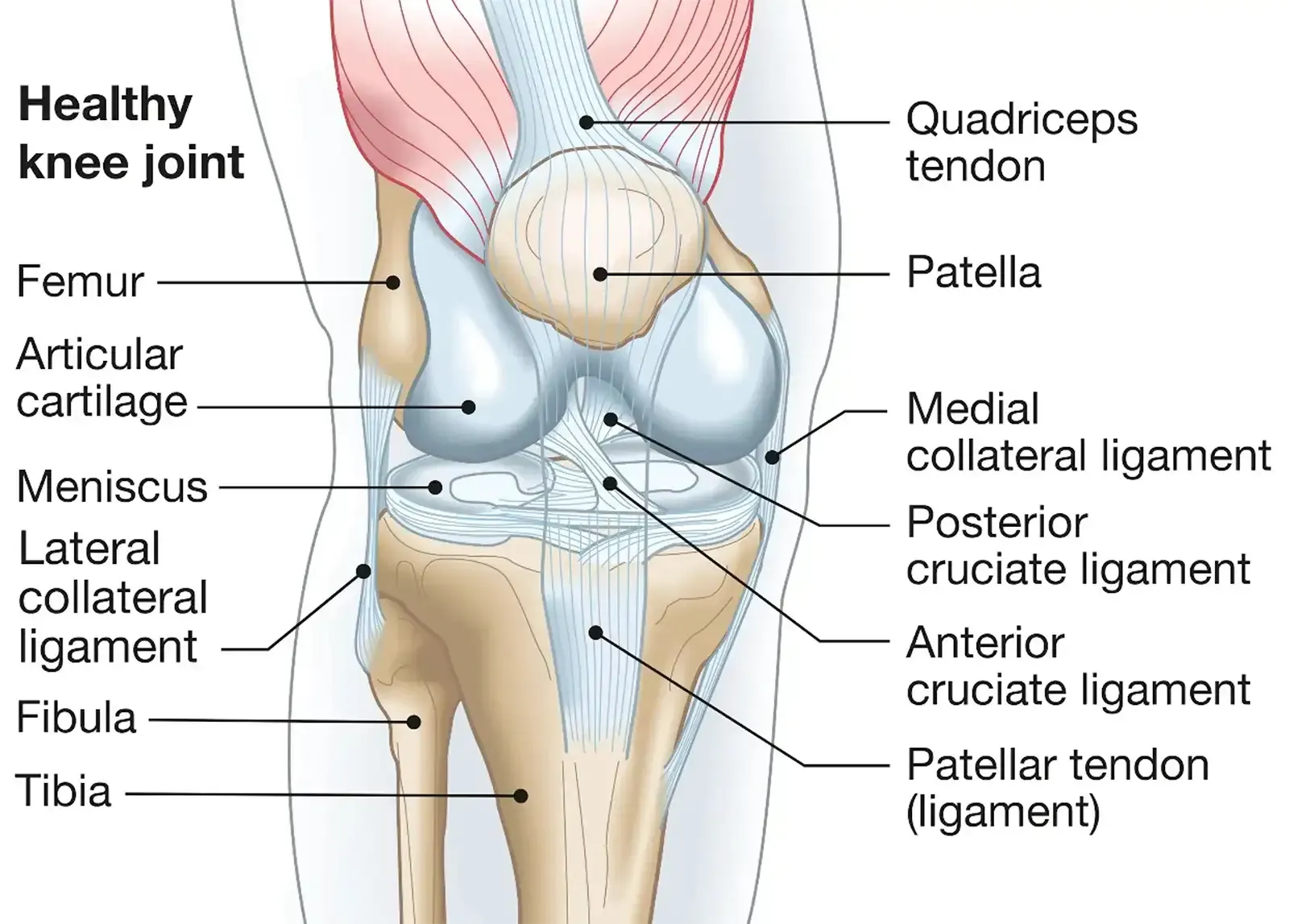
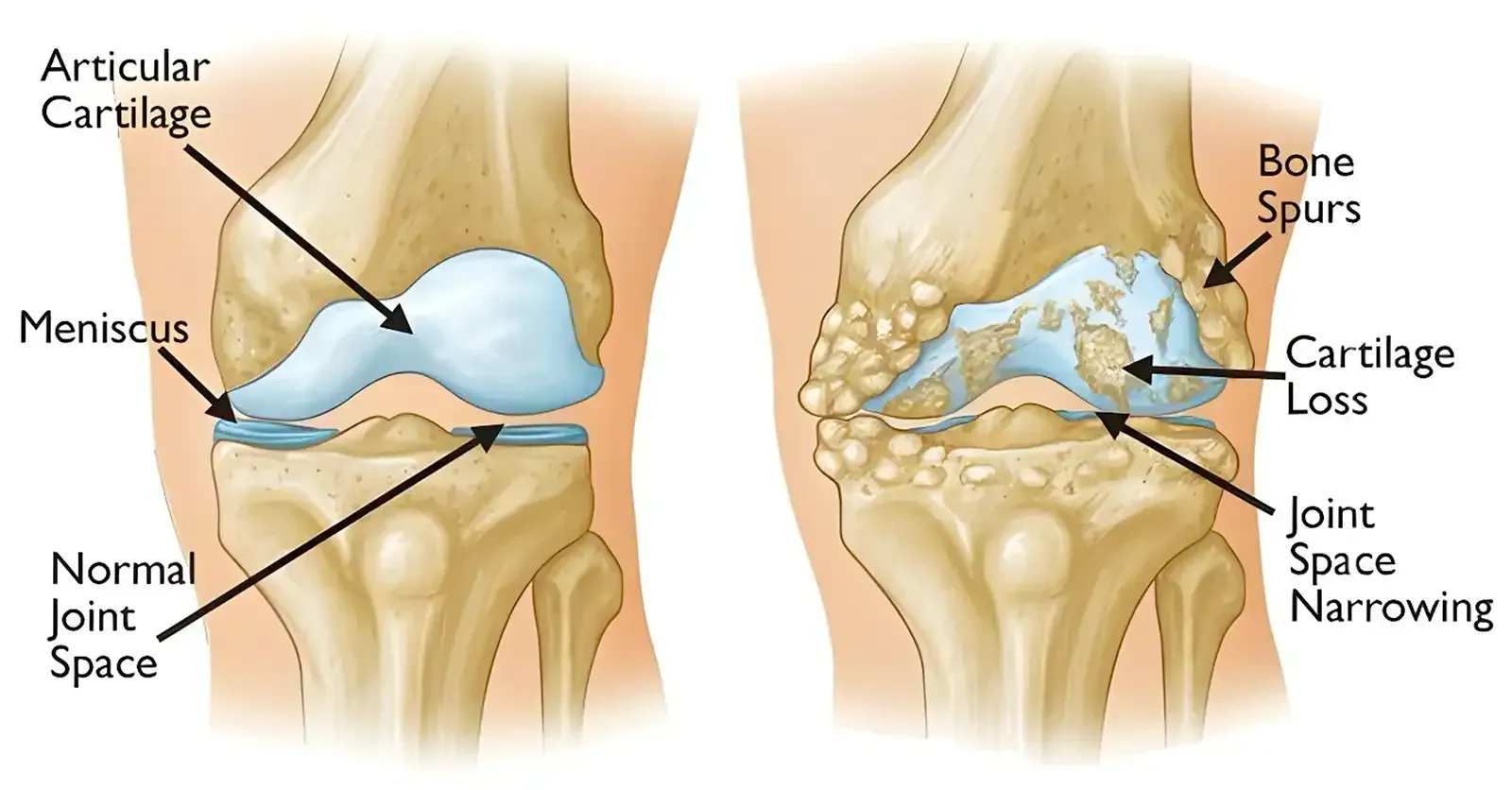
In osteoarthritis, this smooth cartilage wears away. If opposing surfaces both have full thickness cartilage loss, then you will hear this referred to as “bone on bone arthritis”.
This process can also produce inflammation, which can contribute to symptoms like pain and swelling.
If this process is occurring on only one side of the knee, it can also alter the weight bearing axis of the knee, further contributing to excessive load throughout the knee.
As this process develops, patients may notice:
The joint gets irritated and painful
The knee may have pain, swell, feel warm, or become inflamed
Movement becomes harder
You might notice:
- Pain when walking or climbing stairs
- Stiffness, especially after sitting for a while
- A “grating” or crunching feeling
- Reduced ability to fully bend or straighten the knee
Treatment for knee osteoarthritis usually happens in
stages, starting simple and only moving to surgery if things get really severe. The goal is to
reduce pain and improve movement and function.
What are the causes and risk factors for knee arthritis?
We don’t know what the exact underlying mechanism is in osteoarthritis, but a number of risk factors have been identified. These include:
- Age
Osteoarthritis is more common after age 50, although it can occur earlier - Excess body weight
Extra weight increases the load on the knee joints - Previous knee injury
Fractures, ligament tears (such as ACL injuries), or meniscus injuries can damage the joint and increase the risk of arthritis years later - Genetics
A family history of osteoarthritis can increase susceptibility. - Joint alignment problems
Bow legs (varus) or knock knees (valgus) cause uneven weight distribution, leading to faster cartilage wear in certain parts of the knee.
How Is knee arthritis treated?
Surgery is the last stage in a sequence of treatments for arthritis.
In the initial stages, staying active (but smartly) improves symptoms. Low impact activity such as walking, cycling and swimming are some good options. Patient may need to modify their usual activity in order to stay active.
There is evidence to support a specific strengthening and exercise programme called the GLA:D programme. GLA:D® stands for “Good Life with osteoArthritis: Denmark.” It is a structured education and exercise program originally developed in Denmark and now offered in Australia for people with knee or hip osteoarthritis.
In Australia, the standard program includes:
- 2 education sessions — usually about 60–90 minutes each. You learn what OA is, how pain works, the role of exercise and physical activity, treatment options, and how to manage flare-ups.
- 12 supervised exercise sessions — generally one hour, twice a week for 6 weeks.
- Exercises are individualised to your ability, despite being conducted in a group. They focus on leg/hip strength, movement control, balance, and confidence using the knee.
- You are assessed at the beginning and follow-up outcomes are collected, including measures such as walking ability and functional strength.
There is good evidence supporting exercise and education as first-line treatment for knee arthritis, and GLA:D is a structured way of delivering these treatments. The goal is to make the knee stronger and more capable, reduce pain, improve function and confidence, and help you stay active.
Weight management is also important. If overweight, then losing even small amounts of weight can improve symptoms.
Supportive aids like braces and supports can help stabilise the knee or reduce strain on certain areas. Walking aids like a cane can improve balance and reduce pressure on the knee.
Simple analgesia can help patients manage pain.
Injections may have a role for some patients with osteoarthritis.
How does surgery treat knee arthritis?
Surgical treatment for knee arthritis can involve:
- total knee replacement- often with robotic assisted surgery
- partial knee replacement
- osteotomy (cutting the bone to realign the weight bearing axis of the lower limb).
The choice about which surgery to perform is guided by age, anatomy and the underlying condition.
Mr Dillon will have an in depth discussion with you about the options available including both operative and non-operative treatments.
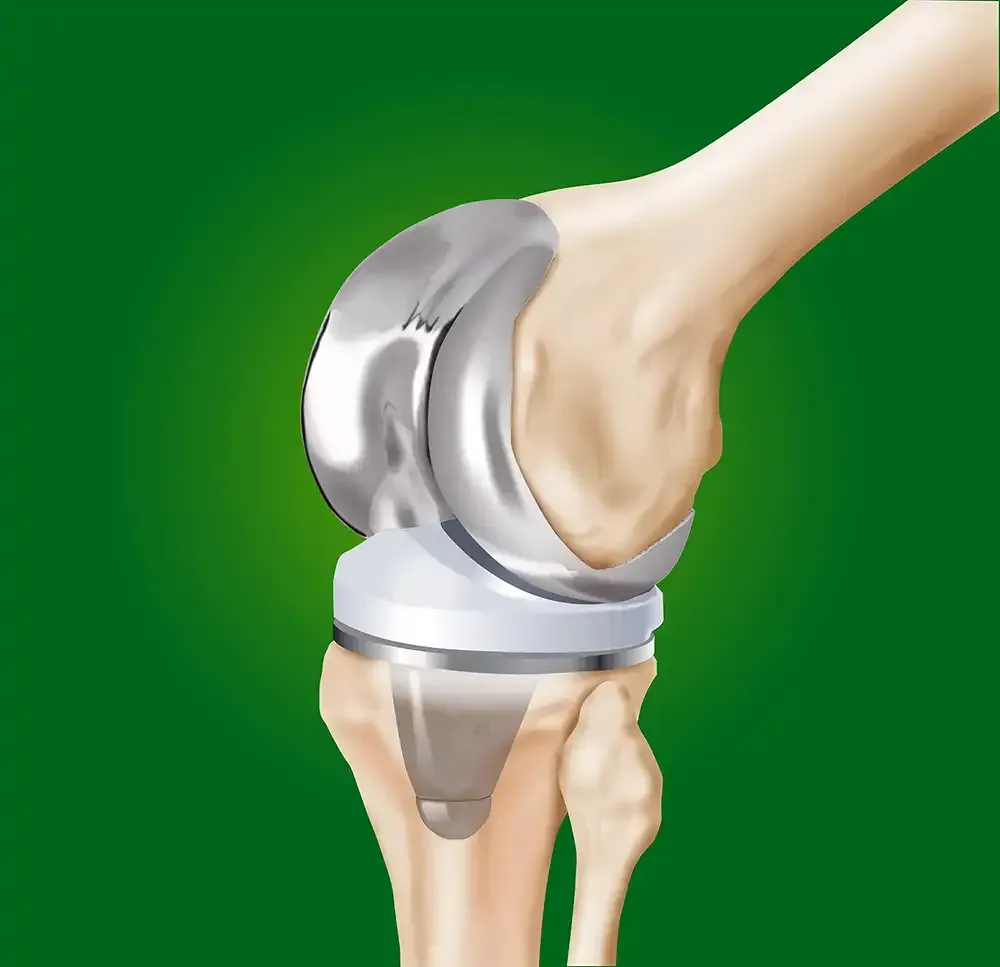
The principles of knee replacement surgery are about removing damaged joint surfaces and replacing them with smooth, artificial parts so the knee can move comfortably again.
The primary aim of knee replacement is to reduce pain and improve everyday function. Most patients experience greater ease with activities such as walking, climbing stairs, and moving about independently.
During a knee replacement, the surgeon does not remove the entire knee. Instead, only the worn cartilage and a thin layer of damaged bone are removed, while as much healthy bone and tissue as possible is preserved. This approach helps maintain the knee's natural structure and supports a more functional outcome.
The rough, painful joint surfaces are replaced with artificial components designed to move smoothly against one another. Metal components are fitted to the ends of the thigh bone and shin bone, with a durable plastic spacer placed between them. Together, these materials create a low-friction surface, allowing the joint to move more comfortably.
An important goal of knee replacement surgery is to restore correct leg alignment and balance. If the knee has become bow-legged or knock-kneed due to arthritis or wear, the surgeon corrects this during the procedure. Proper alignment helps distribute weight evenly across the joint, reducing stress on the implant and improving its longevity.
The ligaments around the knee play a crucial role in stability. During surgery, the surgeon carefully adjusts or releases any tight ligaments and ensures that both sides of the knee are evenly balanced. This helps the new joint feel stable and secure, without being either too loose or too tight.
In robotic assisted surgery, the surgeon is still performing the operation, but the robotic system provides information about the exact anatomy of the patient and helps the surgeon plan and perform bone cuts and position the artificial knee components precisely.
Frequently asked knee surgery questions
What is knee arthritis?
Knee arthritis, most commonly osteoarthritis, occurs when the smooth cartilage that cushions the knee joint gradually wears away. This can lead to pain, stiffness, swelling, inflammation, and reduced mobility. As the condition progresses, some people may experience "bone-on-bone" arthritis, difficulty walking or climbing stairs, and a reduced ability to fully bend or straighten the knee. Treatment usually begins with non-surgical options aimed at reducing pain and improving function.
Learn more about knee arthritis symptoms, causes, and treatment options above.
What are the causes and risk factors for knee arthritis?
The exact cause of knee osteoarthritis is not fully understood, but several factors can increase the risk of developing the condition. Common risk factors include ageing, excess body weight, previous knee injuries, family history, and joint alignment issues such as bow legs or knock knees. These factors can place extra stress on the knee joint and contribute to cartilage wear over time.
Learn more about the causes, risk factors, and prevention of knee arthritis above.
How Is knee arthritis treated?
Knee arthritis is usually treated with a step-by-step approach, beginning with non-surgical options. Staying active, targeted exercise programs such as GLA:D®, weight management, and education can help reduce pain and improve knee function. Braces, walking aids, pain relief medications, and injections may also be recommended. Surgery is generally considered when symptoms become severe and conservative treatments no longer provide adequate relief.
Learn more about knee arthritis treatment options, including exercise programs, pain management strategies, and when surgery may be recommended.
How does surgery treat knee arthritis?
Surgery for knee arthritis may involve a total knee replacement, partial knee replacement, or, in some cases, an osteotomy to improve joint alignment. These procedures aim to remove damaged joint surfaces, restore smoother movement, reduce pain, and improve daily function. The most appropriate surgical option depends on factors such as the severity of arthritis, joint anatomy, age, and activity level.
Learn more about knee replacement surgery, robotic-assisted techniques, and the treatment options that may be suitable for you.