

Hip Replacement Surgery
To alleviate hip pain and improve mobility.
What is hip arthritis?
The hip joint is a ball-and-socket type joint made up of the head of the femur (the “ball”) and the acetabulum of the pelvis (the “cup”).
The rounded “ball” of the head of the femur and the inner surface of the “cup” of the acetabulum are both covered in cartilage, which is smooth and allows for easy and low friction movement over the surfaces as they move against one another. A small amount of fluid called synovial fluid is also present in the joint to reduce friction even more and to nourish the cartilage surfaces.
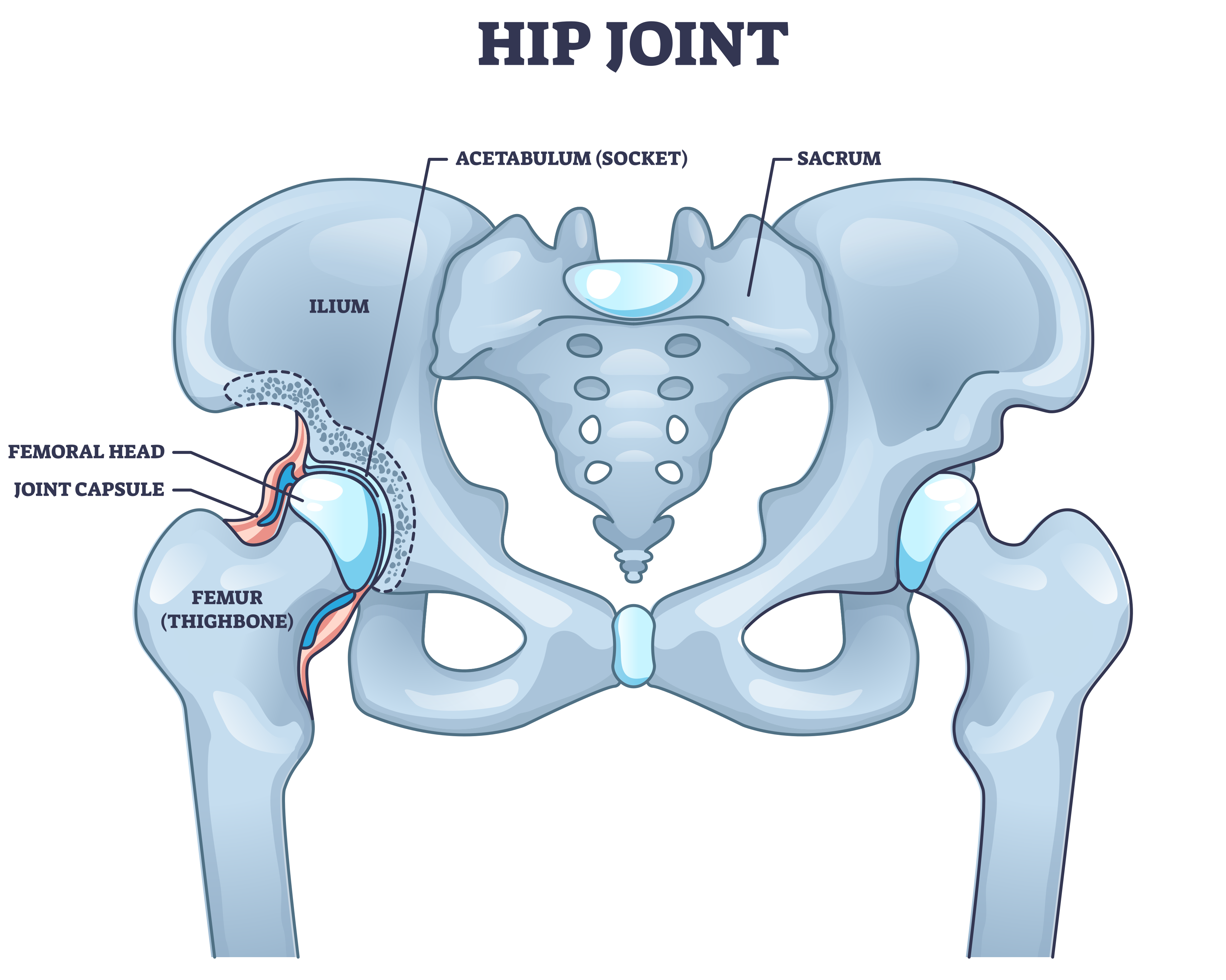
In osteoarthritis, this smooth cartilage wears away. If opposing surfaces both have full thickness cartilage loss, then you will hear this referred to as “bone on bone arthritis”.
This process can also produce inflammation, which can contribute to symptoms like pain and swelling. Bony spurs, “osteophytes” can develop on the edges of the affected bones.
As this process develops, patients may notice:
The joint gets irritated and painful
The hip may have pain, stiffness, or become inflamed.
Movement becomes harder
You might notice:
- Pain
- Stiffness, especially after sitting for a while
- A “grating” or crunching feeling
- Reduced ability to fully move the hip in a normal range of motion
Treatment for hip osteoarthritis usually happens in stages, starting simple and only moving to surgery if things get really severe. The goal is to reduce pain and improve movement and function.

What are the causes and risk factors for arthritis?
We don’t know what the exact underlying mechanism is in osteoarthritis, but a number of risk factors have been identified. These include:
- Age
Osteoarthritis is more common after age 50, although it can occur earlier - Excess body weight
Extra weight increases the load on the joints - Previous hip injury
- Congenital hip conditions
Conditions from birth that alter the anatomy of the hip can cause arthritis in later life. For example, hip dysplasia, which is a condition in which the hip socket is too shallow and doesn't fully cover the "ball" of the femur. - Genetics
A family history of osteoarthritis can increase susceptibility.
How Is Arthritis Treated?
Surgery is the last stage in a sequence of treatments for arthritis.
In the initial stages, staying active (but smartly) improves symptoms. Low impact activity such as walking, cycling and swimming are some good options. Patient may need to modify their usual activity in order to stay active.
There is evidence to support a specific strengthening and exercise programme called the GLA:D programme.
GLA:D® stands for “Good Life with osteoArthritis: Denmark.” It is a structured education and exercise program originally developed in Denmark and now offered in Australia for people with knee or hip osteoarthritis.
In Australia, the standard program includes:
- 2 education sessions — usually about 60–90 minutes each. You learn what OA is, how pain works, the role of exercise and physical activity, treatment options, and how to manage flare-ups.
- 12 supervised exercise sessions — generally one hour, twice a week for 6 weeks.
- Exercises are individualised to your ability, despite being conducted in a group. They focus on leg/hip strength, movement control, balance, and confidence using the knee.
- You are assessed at the beginning and follow-up outcomes are collected, including measures such as walking ability and functional strength.
There is good evidence supporting exercise and education as first-line treatment for arthritis, and GLA:D is a structured way of delivering these treatments. The goal is to make the hip stronger and more capable, reduce pain, improve function and confidence, and help you stay active.
Weight management is also important. If overweight, then losing even small amounts of weight can improve symptoms.
Supportive aids can help reduce strain on certain areas. Walking aids like a cane can improve balance and reduce pressure on the hip.
Simple analgesia can help patients manage pain.
Injections may have a role for some patients with osteoarthritis.
How does surgery treat hip arthritis?
Surgical treatment for hip osteoarthritis involves total hip replacement, referred to as “hip arthroplasty”.
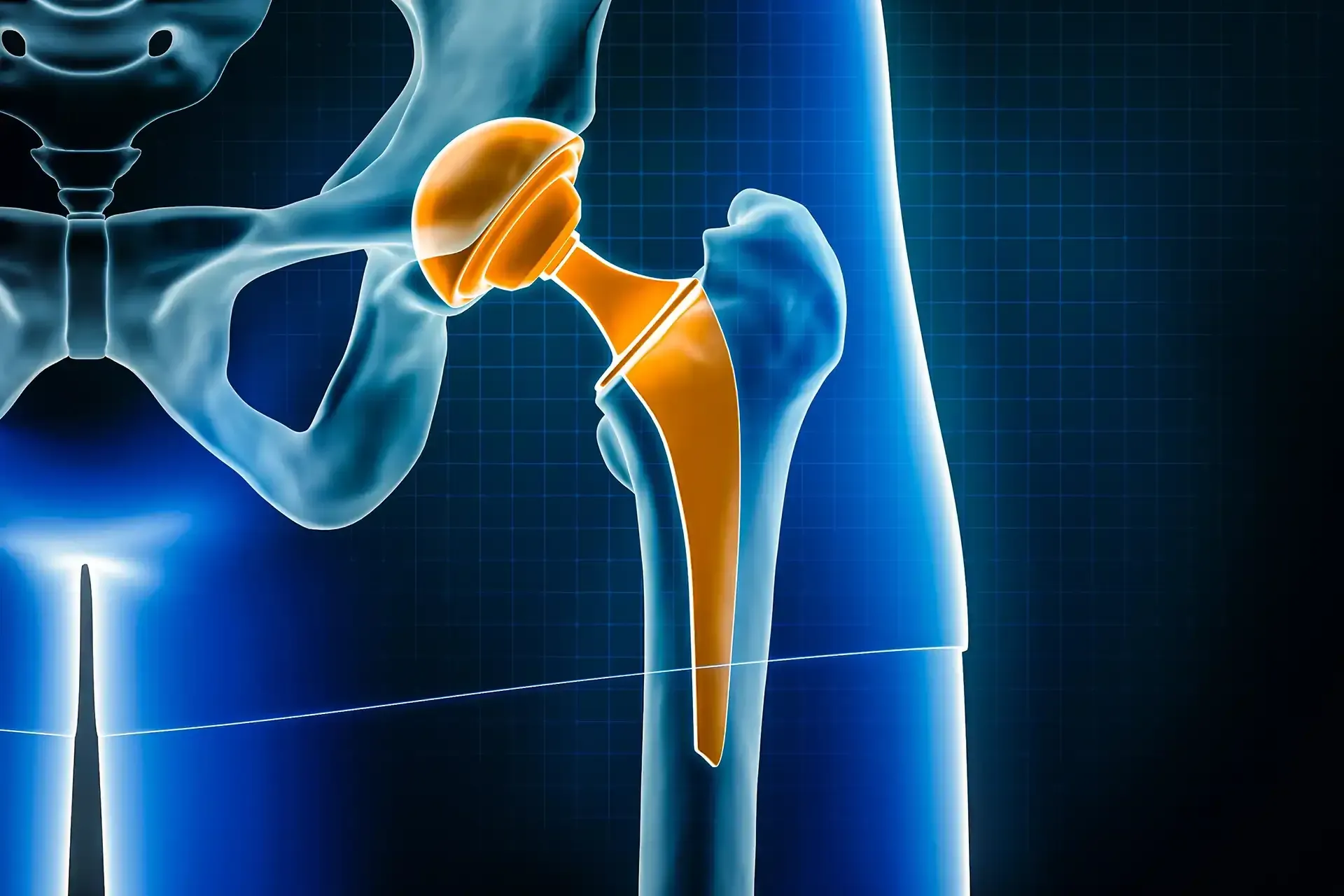
The principles of hip replacement surgery are about removing damaged joint surfaces and replacing them with smooth, artificial parts so the hip can move comfortably again.
In this procedure, the abnormal femoral head is removed and replaced with a new femoral stem and head, and the abnormal surface of the cup of the pelvis is removed and a prosthetic cup is positioned with a smooth liner to mimic the smooth surface of cartilage. This provides both a new smooth “head” and “socket” to articulate smoothly.
Mr Dillon performs this procedure through both an anterior (through the front) approach and posterior (through the back of the hip) approach.
Mr Dillon will have an in-depth discussion with you about the options available including both operative and non-operative treatments before deciding on a treatment plan that is best suited to you.
The primary aim of hip replacement is to reduce pain and improve everyday function. Most patients experience greater ease with activities such as walking, climbing stairs, and moving about independently.
Frequently asked hip surgery questions
What is hip arthritis?
Hip arthritis, most commonly osteoarthritis, occurs when the cartilage that cushions the hip joint gradually wears away. This can lead to pain, stiffness, inflammation, reduced mobility, and in advanced cases, "bone-on-bone" contact within the joint. Treatment typically starts with non-surgical options to reduce pain and improve movement.
Learn more about hip arthritis symptoms, causes, and treatment options above.
What are the risk factors for hip arthritis?
The exact cause of osteoarthritis is not fully understood, but several factors can increase the risk of developing hip arthritis. Common risk factors include ageing, excess body weight, previous hip injuries, and a family history of osteoarthritis. These factors can contribute to joint wear and tear over time.
Learn more about the causes, risk factors, and prevention of hip arthritis above.
How is arthritis treated?
Hip arthritis is usually managed with a step-by-step approach, starting with non-surgical treatments. Exercise, activity modification, and structured programs such as GLA:D® can help reduce pain and improve mobility. Weight management, walking aids, pain relief medications, and injections may also be recommended. Surgery is generally considered only when symptoms become severe and other treatments are no longer effective.
Learn more about arthritis treatment options, including exercise programs, pain management, and when surgery may be recommended.
How does a hip replacement treat arthritis?
Surgery for advanced hip arthritis typically involves a total hip replacement (hip arthroplasty). During the procedure, damaged joint surfaces are removed and replaced with artificial components that create a smooth, low-friction hip joint. The goal is to relieve pain, restore mobility, and improve everyday activities such as walking, climbing stairs, and maintaining independence.
Learn more about total hip replacement surgery, surgical approaches, and what to expect before and after treatment.
Does Mr Dillon use the anterior approach for hip replacement surgery?
Mr Dillon uses both the anterior (from the front of the hip) and the posterior (from the back of the hip) approach for hip replacement surgery.
Mr Dillon will discuss with you which approach may be best for you.